
Optimized, Alone, and Useless

I know this man because I have met him in the mirror.
He wakes early. He lifts. He tracks his meals. He stacks his habits like sandbags against chaos. He keeps the room clean, the calendar tight, the face calm. He tells himself he is building a life.
Then night comes, and the silence says otherwise.
That is the trap.
A man can improve himself with great seriousness and still feel like he has slipped out of his own existence. The machine age has made that feeling worse. It has filled the world with talk about white-collar work growing shakier under AI, with warnings that work itself is being hollowed out, and with a great deal of panic dressed up as masculine wisdom.
I do not think discipline is the enemy.
I think a man can worship discipline so hard that he forgets what it was supposed to serve.
I. The treadmill of male self-repair
I began where many men begin.
With repair.
Fix the body. Fix the schedule. Fix the money. Fix the posture. Fix the weak spots. Fix the hesitations. Fix the mind. Keep going until there is nothing left in you that can be accused of softness, waste, or drift.
There is something noble in that at first. A man should learn command over himself. He should know how to carry weight. He should resist sloth and self-pity. I have no patience for the soft creed that treats every demand as oppression. A man who cannot rule himself is a house with no doors.
Still, self-repair can become a moving sidewalk that never reaches the terminal.
A good deal of modern male advice treats life as a technical malfunction. Adjust inputs. Remove distractions. Increase output. Become hard. Become cold. Become sharp. Somewhere along the way, the man stops being a soul and becomes a dashboard.
That is why so much online advice feels sterile. You can hear the emptiness humming beneath it. Even recent writing on men reading themselves deeper into self-reliance and on the strange culture of monk mode, dopamine detox, and lonely male self-improvement catches that same stale note. The methods vary. The loneliness remains.
I understand why this happens.
Repair is neat.
People are not.
A dumbbell does not misunderstand you. A timer does not betray you. A spreadsheet does not ask why you seem so distant. Human beings are harder company. So the lonely man takes refuge in systems. He calls it growth. Sometimes it is. Sometimes it is simply retreat with better lighting.
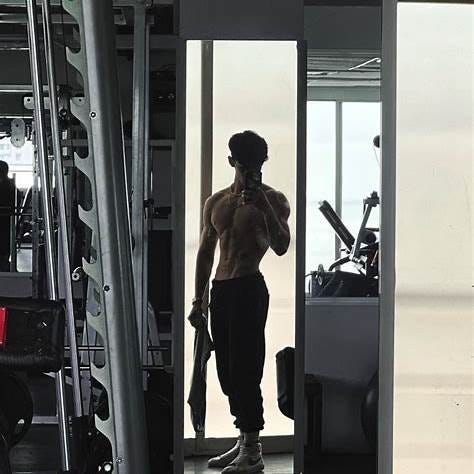
II. Why optimization without purpose hollows a man out
The problem is not that men want to improve.
The problem is that many of us no longer know what improvement is for.
A man once sharpened himself for something outside himself. For a wife. For children. For a trade. For a church. For a crew. For a town. For a regiment. For a hard duty that would look him in the face and demand an account. Strength had an object. It had somewhere to go.
Now the object often disappears, while the regimen remains.
That is how a man becomes an efficient ghost.
He has habits. He has metrics. He has the right apps. He has a cleaner diet than his grandfather and less reason to be alive. A marvelous creature. Very lean. Very optimized. About as rooted as a shopping cart.
Recent pieces on the loneliness many men carry in embarrassed silence and on men being overtrained in self-reliance and undertrained in emotional community put a finger on the wound. Men are often being told to become more capable while being given fewer worthy things to be capable for.
That mismatch does real harm.
It makes some men bitter. It makes others numb. It makes others theatrical. The loud confidence you see online is often grief with a neck tattoo. The man is not whole. He is bracing himself.
I have felt that hollowness myself. You hit the marks. You keep the promises you made to your calendar. Yet something in the life still feels unclaimed. You are active all day and absent from your own existence by evening.
That is a miserable way to live.
III. The gym, the grindset, the vacant apartment
I want to be fair.
The gym is good.
Work matters.
Restraint matters.
Men need burden. We need tasks that answer back. We need resistance. A life of pure comfort makes a man soft in strange places. It weakens the will, then the tongue, then the whole posture of the soul. Too much ease turns a man into pudding in boots.
Still, many men now live in a distorted version of discipline. Lifting becomes image maintenance. Career becomes status panic. Reading becomes ammunition. Rest becomes another tactic. Even friendship gets treated like a networking opportunity in sweatpants.
That is how good things become ridiculous.
You can see why recent writing keeps circling the sigma and monk mode promise sold to lonely men and the false glamour of self-improvement as a cure for male loneliness. There is a whole little bazaar built around the idea that a man can grind his way out of the human condition. He cannot. He can only become a more disciplined captive if nothing in his life changes except his routines.
Then AI enters the room and makes the whole thing worse.
Now even the office worker, who once thought his mind would shield him, watches software edge closer to his desk. A recent piece on men trying to think past the paycheck in the AI age and another on AI threatening male-coded white-collar roles both point toward the same fear. Men who built their dignity on being economically necessary now feel the floorboards creak.
So the modern man tightens the regimen.
He trains harder.
He becomes cleaner, stricter, more watchful.
And often more frightened.
IV. Platforms that profit from male isolation
This is where the whole business turns dirty.
There is money in male confusion.
A lonely man is a splendid customer. He can be sold courses, private groups, supplements, scripts, coaching, emergency certainty, and a thousand little identity kits. He can be told that his pain proves he is secretly superior. He can be trained to confuse grievance with destiny. He can be milked like a sorrowful cash cow in compression shorts.
That market exists because the need is real.
A good recent piece on the male loneliness economy names the machinery plainly, while another on why the peddlers of alpha-male snake oil often outcompete weaker public criticism explains part of the appeal. The false cure at least speaks with confidence. It offers shape, ritual, command, and a sense that someone finally expects something of you.
That is why bad answers spread.
They give form to pain.
A man in drift does not always need a perfect argument. He needs a frame. He needs a task. He needs a way to stand up tomorrow without feeling ridiculous. The charlatans know this. They sell brotherhood-flavored products to men who have never had the real thing.
And the real thing is harder.
It cannot be bought in twelve video modules.
It does not arrive through a subscription tier.
It is built by repeated contact, honest labor, mutual burden, and standards that cost something.

V. Building a life instead of a regimen
I do not think the answer is less discipline.
I think the answer is to place discipline beneath life.
That has been the turn for me. The body is not the mission. The morning routine is not the mission. The salary is not the mission. The cold shower, the checklist, the optimization stack, all of it can be useful. Yet tools make poor gods. A man can kneel before his own habits with startling devotion. The old pagans at least had better interior decorating.
So what is the mission?
For me, it begins when improvement stops circling the self and starts attaching to duty, people, place, and craft. I want strength that can protect. Competence that can serve. Money that can build something worth inheriting. Order that can host other people without resentment.
I also want men around me.
Real men. Not an audience. Not a feed. Not a comment section. Men who can work shoulder to shoulder, disagree without shattering, and show up again next week. That last part matters. Brotherhood is built by recurrence. Recent writing on brotherhood being earned rather than announced and on bringing back male groups aimed upward rather than inward gets closer to the truth than most glossy male branding ever does.
A man does not become whole by perfecting his enclosure.
He becomes whole by becoming useful beyond himself.
That is the real pivot.
The point of strength is not to admire the cage bars with better posture. It is to become fit for a human life. A life with obligations. A life with affection. A life in which somebody would notice if you did not come home. A life in which your discipline has somewhere noble to land.
I still believe in hard things.
I still believe men should carry weight.
I still believe standards matter.
I no longer believe optimization can save us.
A regimen can tighten a life.
It cannot tell a man why that life should be lived.
For that, he needs duty. He needs brothers. He needs a claim on his strength from outside his own vanity.
Otherwise he becomes very polished.
Very capable.
And strangely gone.